
Consolidation
Freight Consolidation: Enhance Efficiency with Freight Consolidation & Refrigerated Consolidation
If you’re tired of the challenges that come with traditional LTL, there’s an alternative. Many the typical LTL services challenges go away when you move to a freight consolidation program. These service improvements don’t always come with a cost increase compared to traditional LTL. Freight consolidation is a special solution that’s driven by volume, but there’s no secret number of shipments that make it a viable option. This volume can come from just your shipments or the total shipments a logistics provider has. If you’ve been struggling to find the right balance of cost vs. service, WHY Logistics can help you explore if freight consolidation is an option for you.
Understanding Freight Consolidation & Refrigerated Consolidation
Before exploring if a freight consolidation program makes sense for your business, understanding how freight consolidation works is vital. Freight consolidation can reduce the number of times your products are handled and potentially shorten lead times.
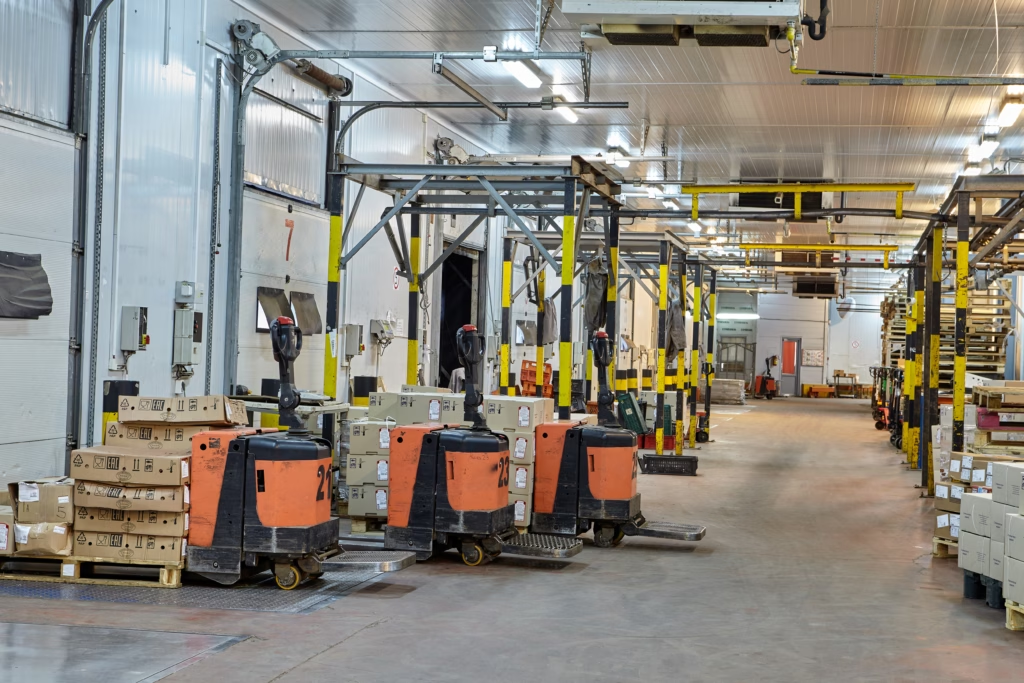
- The impact of Volume: As a general rule, most trailers can fit at least 26 pallets. Whether all those pallets are yours or a from multiple shippers doesn’t matter in freight consolidation. Ensuring all the products can be on the same trailer is the first part. Whether it’s the type of product or a certain temperature requirement, all the products must be similar enough. When you have enough volume to load onto a trailer, the total cost is then shared across all the freight. Sharing this cost reduces the total cost of delivering the shipments.
- Set Sailing Schedules: Predictability is a must when it comes to freight consolidation. To make this happen most consolidation programs run on set days. This could mean that a truck will leave the consolidation location or be delivered to the final location on a specific day. When you know when something is going to happen, you can plan for it. Consolidation providers outline what days freight must be received on their dock in order to ship.
- Operations Model: Every carrier operates a little differently even in consolidation programs. Traditional LTL carriers have terminals in multiple markets. This allows them to move products from terminal to terminal as needed. Consolidation programs can include a single terminal location or many. Depending on what the program is designed to do, the models might differ. If it’s an east coast to west coast program the consolidator might have a terminal in each market. But if it’s a consolidation program for a regional retailer, the consolidator might only have one consolidation location.
Freight Consolidation & Refrigerated Consolidation Industry Insights
Simplicity is key in logistics. If you’ve been around logistics for a while, you’ve seen all the moving parts and things that can go wrong. The best chance for success comes from a simplified operation and that is what freight consolidation provides. There are different reasons why consolidation programs are options in the industry. Here we explain some of the main types of consolidation programs.
- Dry Freight Consolidation: Anyone who has shipped dry LTL understands that delays and accessorial charges are commonplace. Dry consolidation programs offer alternatives to the traditional LTL model. Many of these are point to point programs driven to reduce handling and transit times. To ship from the west coast to the east coast with a national LTL carrier, it could take 7-8 days for products to be delivered. On top of that your products may be handled at multiple terminals opening the shipment to possible damage. In a coast-to-coast consolidation program, the freight is only handled at the pickup location and the delivery location. This could also come with a 1–2-day shorter transit time. If you’re simply transferring inventory or you have enough lead time, it could also come with cost savings. When a shipment is not time sensitive there are also programs that take advantage of intermodal shipping. For an extra 3-5 days of transit, you may end up with significant cost savings.
- Refrigerated Freight Consolidation: With limited national refrigerated LTL providers refrigerated consolidation is a great option. Different products require different temperatures and our carries handle all temperature ranges from frozen to air conditioned. Refrigerated consolidation programs can be built around your service requirements. If you have both refrigerated and frozen products, those orders can be picked up on a single trailer and separated at the consolidation site. These orders can then be loaded onto separate refrigerated and frozen trucks destined for where the orders need to go.
- Customer Specific Freight Consolidation: Most receivers would prefer to unload a single truck as opposed to getting 5-10 LTL deliveries per day. Some receivers also allow carriers to drop a trailer in their yard. This allows the receiver to unload the freight at their convenience. Anyone that operates a warehouse or distribution center knows the importance of consistency. This is why may receivers prefer consolidation programs, where they can plan their workload better. If they know they are going to have a trailer full of products every Tuesday, they can plan for that.
Benefits of Freight Consolidation & Refrigerated Consolidation with WHY Logistics:
It can be hard to determine if a consolidation program is right for you. Programs like this can come with a commitment of volume or a commitment to a pickup or delivery schedule. The first part of understanding this fit is a review of shipping data and we all know analyzing data can be difficult. That’s where we come in; we’ll help you work through your data to determine the best path forward.
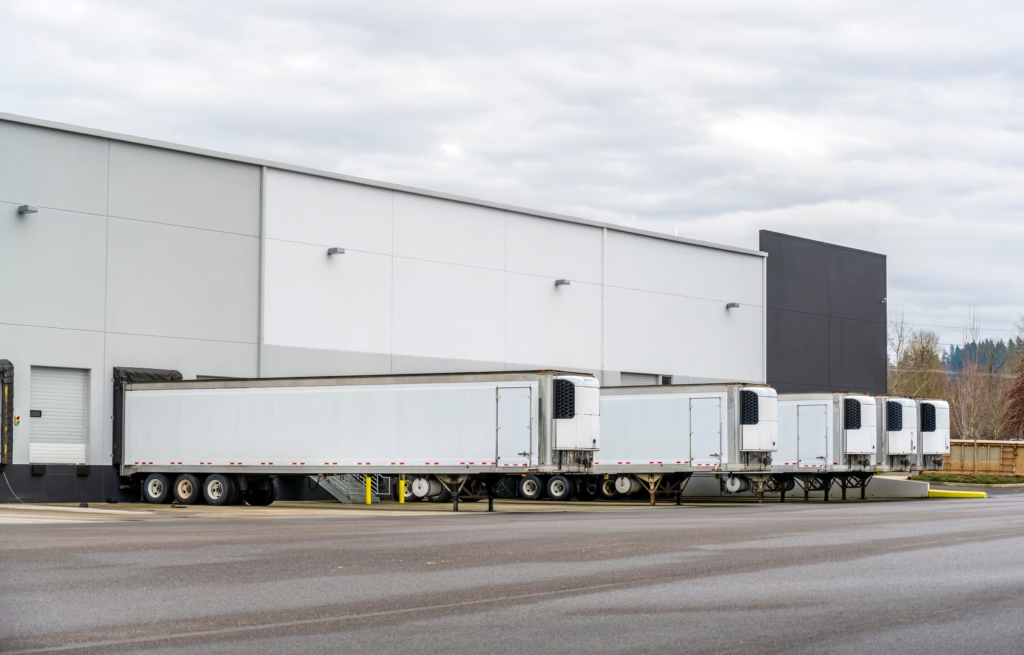
- Customizable Programs: Most supply chain models are different. This can make it hard to find a program that works right for you. Products with short shelf lives may not fit well into some programs. Unique temperature requirements may prevent a product from fitting into any existing program. A carrier’s set days of pickup and delivery may not work with what’s been committed to a customer. All this can be managed through a customized freight consolidation program that WHY can design.
- Data Modeling: Understanding the overall impact of a decision makes those decisions easier. Using your past shipment history can help you better understand what the costs of any freight consolidation program will be. We’ll work with your data to help us understand what options you have. Then we can determine what freight consolidation program will be the best fit for your business.
- Established Relationships: Knowledge is half the battle; relationships are the other half. Being able to leverage existing relationships allows us to explore unique solutions. We understand what works for each carrier and how they operate. This allows us to easily identify what works best for you.
WHY Freight Consolidation & Refrigerated Consolidation
Predictability and control can help remove headaches from your operation. Freight consolidation programs can offer both as long as they work for your business. WHY Logistics knows how to both qualify these programs for you or build one if you need it. Some of our best consolidation programs are built from scratch. It takes years of experience and knowledge of how the industry works to do this. For us, we love a good challenge, so let us see if we can help.