

In today’s cold chain logistics world, temperature control is a must, with cost efficiency and service reliability close behind. When shipping smaller orders of temperature-sensitive goods — like produce, dairy, pharmaceuticals or frozen foods — the difference between a smooth ride and a costly disruption often comes down to one critical decision: will you choose refrigerated less-than-truckload (LTL) or refrigerated freight consolidation? Understanding the difference can help shippers make smarter transportation decisions and improve both efficiency and product integrity. At WHY Logistics, we manage these two modes of shipping side by side every day — and we’ll break them down, so you know exactly when each one makes sense.
What Is Refrigerated LTL?
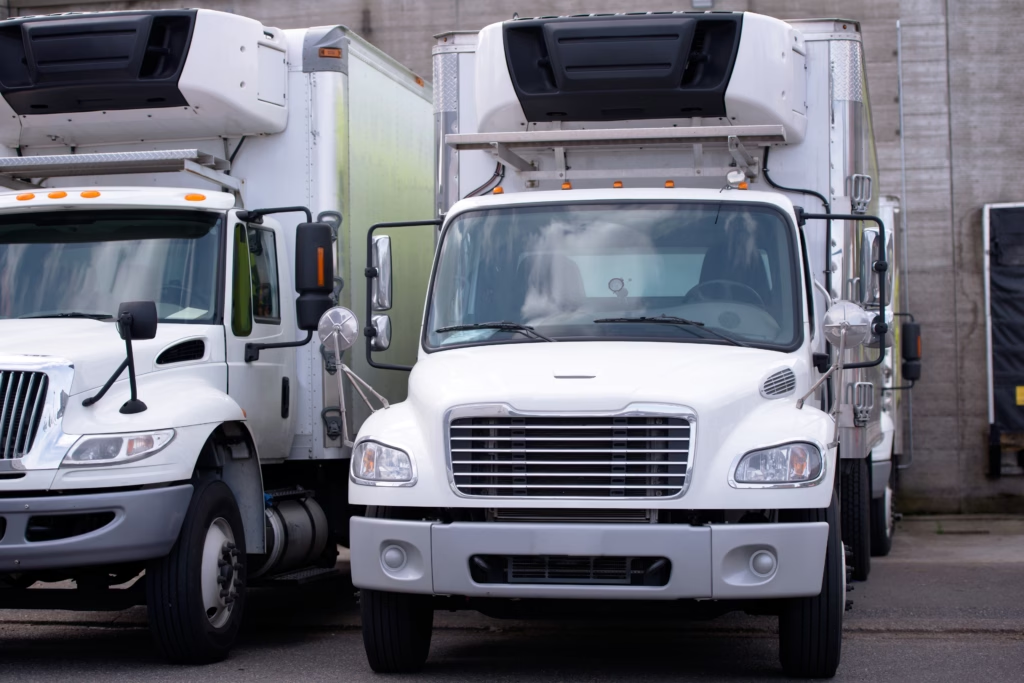
Refrigerated LTL is a service that allows multiple shippers to share space in a temperature-controlled trailer. Each shipper pays only for the portion of the trailer their freight occupies. The carrier picks up multiple orders and brings them back to their terminal. They then group these shipments by where they are delivering. For orders that need to travel a long distance the carrier will move them to another terminal while local orders stay at the same terminal where they were picked up. From there the orders are planned on routes for delivery.
Advantages of Refrigerated LTL
- Flexibility: Ideal for smaller, frequent shipments that don’t fill a full trailer.
- Cost Sharing: Shippers pay only for their share of trailer space, making it cost-effective for partial loads.
- Wide Carrier Network: Many major LTL carriers now offer reefer services with nationwide coverage.
Challenges of Refrigerated LTL
- Multiple Touchpoints: Products can be handled at multiple terminals increasing the risk of damage and potential risk to temperature stability.
- Less Control Over Transit Time: Shipping schedules are based on carrier optimization, not individual shipper needs and, in many cases, require extended lead time.
- Limited Temperature Zones: Most LTL reefers maintain a single temperature, which can restrict mixed-product loads.
Our advice
Use refrigerated LTL when you have enough lead time and you’re shipping only a few orders or if the orders are smaller quantities. This can be the best fit when you value flexibility and cost sharing.
What Is Refrigerated Freight Consolidation?
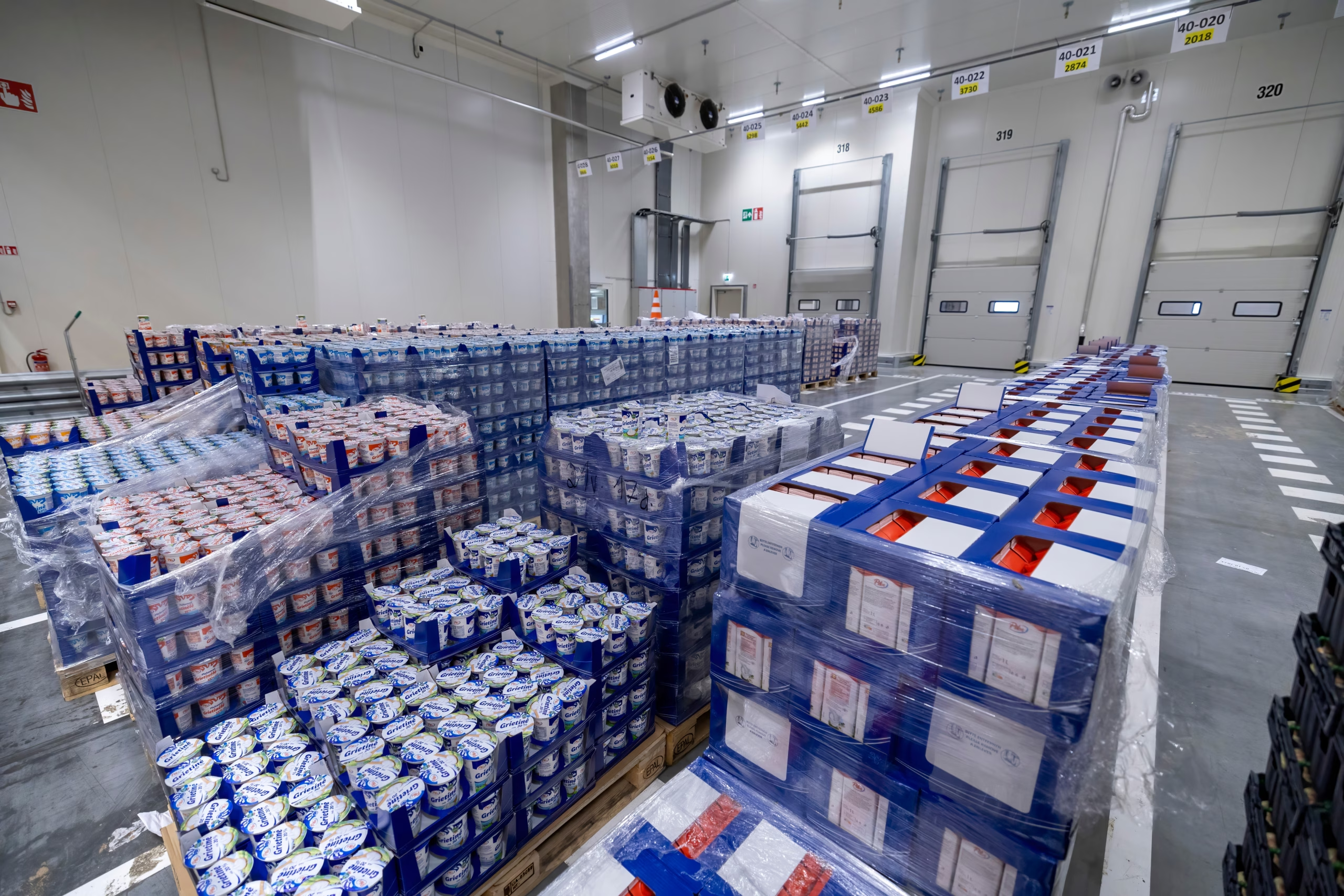
Refrigerated freight consolidation is a hybrid model that combines smaller shipments into one full truckload (FTL) — typically managed by a 3PL or consolidation specialist. These orders can come from multiple shippers or just your orders. Here’s how it works: Multiple smaller shipments arrive at a consolidation hub, get grouped together, and then move out as one full truckload (FTL). The key difference is planning and coordination: shipments are strategically combined at a consolidation point or warehouse before moving as a single truckload to the delivery location.
Advantages of Refrigerated Freight Consolidation
- Faster Transit: Once consolidated, freight moves as a single full-truckload, with faster, more predictable transit times.
- Fewer Touchpoints: With less handling comes less of a chance for damage and temperature fluctuation.
- Enhanced Visibility and Coordination: With orders moving as truckloads, there is better control, visibility, and communication throughout the shipment.
Challenges of Refrigerated Freight Consolidation
- Scheduling Requirements: Freight must arrive at the consolidation point on time to make the scheduled truckload.
- Shipment Sizes: Smaller orders may not fit in this model as pricing is typically higher than LTL for small orders.
- Lead Time: May require more planning than traditional LTL service.
Our Advice
This model shines when you have recurring lanes or predictable patterns. Choose consolidation when your shipments have volume consistency, when they go to similar endpoints, and when you can plan ahead. It’s the model for moving more efficiently, with less risk.
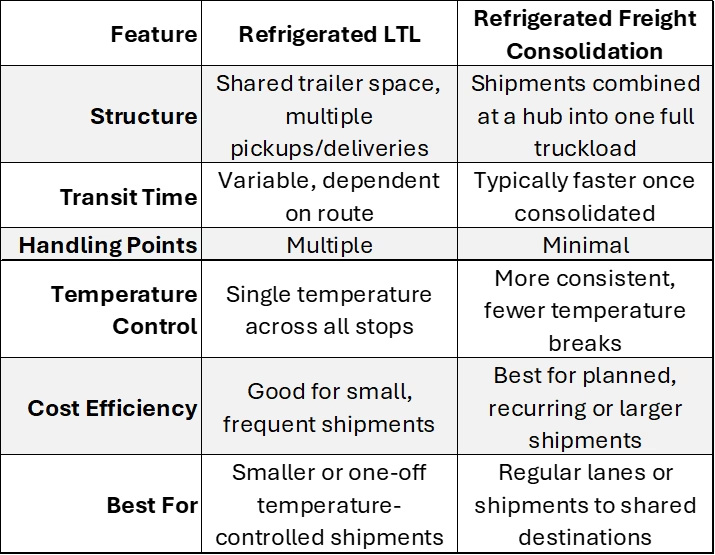
Side-by-Side: The Decision Table
Here’s our top-level comparison to help clarify when each model makes sense:
What’s Right for You?
If you’re shipping smaller quantities, to varied destinations, and on a flexible schedule — go with refrigerated LTL. If your operation involves regular shipments to fewer destinations, predictable volumes and a need for higher reliability — consolidation is your friend.
At WHY Logistics, we help you evaluate your shipment profiles, lane characteristics, and cost-sensitivity. Then we match you with the right model — or even a hybrid strategy — to get the best outcome for your cold-chain requirements.
Bottom line: Balancing cost, control and speed is the art of cold-chain logistics. Refrigerated LTL gives you flexibility; refrigerated consolidation delivers efficiency. Let the team at WHY Logistics help you build a smarter, more resilient cold chain strategy.