
Third Party Warehousing
Third Party Warehousing: A Simpler Way to Find the Right Partner
What do you do when your products need storage, but you don’t have the space to keep them? You turn to a Third-Party Warehousing solution. Third-party warehousing allows businesses to outsource the storage, handling, and distribution of their products to experts who specialize in these operations. Instead of managing your own warehouse and logistics, partnering with a Third-Party Warehouse lets you focus on growing your business while professionals handle the daily operations. At WHY Logistics, we simplify this process by connecting you with a warehouse partner that truly understands your needs — ensuring you start with the right third-party warehousing solution from day one.
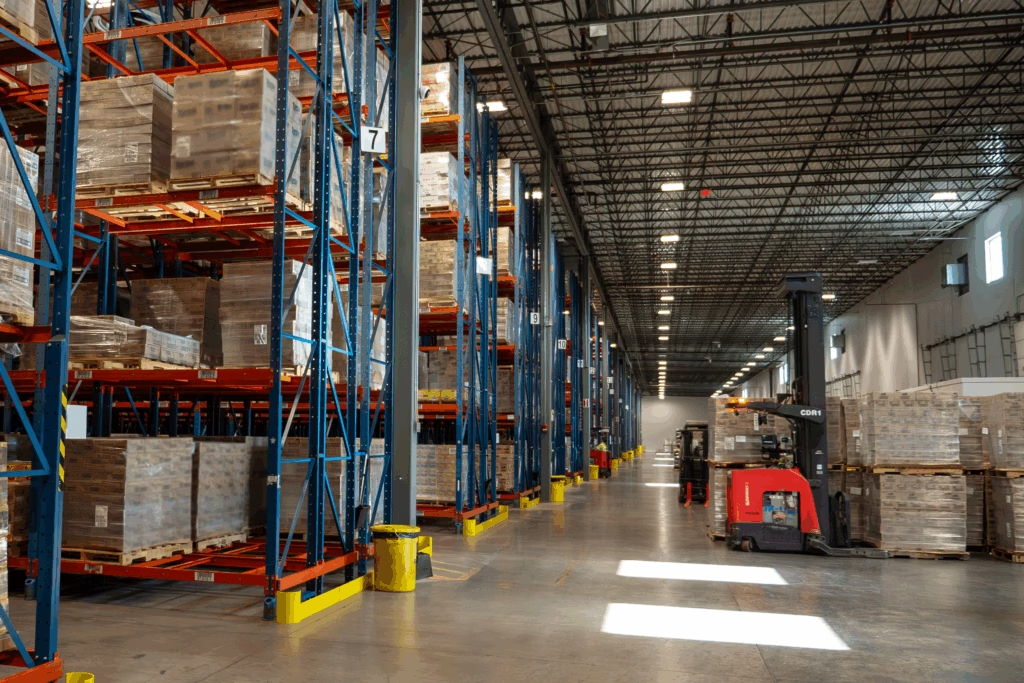
Understanding Third Party Warehousing
Warehouses are entrusted to hold your inventory until you need that inventory. This can apply to finished products that need to be held until your customers are ready for them. It can also apply to raw materials that need to be stored until they go into production. A Third Party Warehouse is a crucial element in connecting your suppliers, manufacturing or import operations and your customers.
- Dedicated vs. Public: Third Party Warehousing solutions come in two forms; contract or public. In a contract or dedicated warehouse, the space is all yours. This sounds great, but you need to be able to justify this based on the size of your inventory. The space requirement for Contract warehouses average around 250,000 square feet. These operations typically come with a longer-term commitment such as three (3) to seven (7) years. Many times, there are shared risks and investment between the provider and you, the customer. A public warehouse, by contrast, comes with fewer restrictions. You pay for the space occupy and the service provided when they are needed. Without any long-term commitments, you have less control over the operations process.
- Specialization: Every warehouse typically has something they do better than their competition. When it comes to the services a warehouse performs, they are typically broken into three categories: traditional warehousing, fulfillment or an Omni-Channel. Traditional warehousing refers to the movement of larger quantities to traditional retailers, distributors or wholesalers in case or pallet quantities. Fulfillment warehousing relates to direct to consumer and e-commerce shipping which typically is shipped in case or each level quantities. Omnichannel warehousing, means the warehouse provided can handle any order or any size being shipped to just about anyone.
- Capacity: The joke in the warehousing world is that when there’s no space, go get a “wall stretcher”. Many newbies to warehousing will spend hours looking for that mysterious “wall stretcher”. In reality, there is no such thing as a “wall stretcher”. In Third Party Warehousing, capacity planning is essential to ensure you have enough space to deliver on customer expectations. As you prepare to find a warehouse partner, space planning is a shared responsibility between the provider and the customer. If you want to have space for your products, you need to communicate that to the warehouse. If there is a projection for how much space if needed from the customer, it’s the job of the provider to have that space. As a customer, be prepared to pay for the space you think you need so the warehouse can make sure they have it for you.
Third Party Warehousing Industry Insights
Most people think finding a warehouse in the right location is all that matters. If you’ve been around logistics long enough, you know that comes second. Knowing your business and what you expect from a warehousing solution comes first, then you can figure out where it should be located. This approach to warehouse selection will save you time and money in the long run. Changing a warehouse is not an easy process, especially in today’s world of technology integration. When selecting a warehouse partner, take your time and make sure you make the right choice the first time.
- What Matters to a Warehouse: Just like you want to know what to expect from a warehouse, they want to know what to expect from you. How the product is being brough into them matters; whether it imported or domestic and palletized or floor loaded. Does your inventory turnover quickly; not all warehouse providers want to handle product that only sits in the warehouse. How are orders sent to the warehouse; is someone expect to type in every order or can they be sent systematically. All these things and many more matter to a warehouse provider and they make an assessment if your account might be a good fit.
- Specialized Services: It’s hard for warehouse providers to cater to the needs of all customers. This is why most warehouse providers have built their business on catering to a specific need. As you evaluate third-party warehousing partners, you need to understand what their core business is. If the provider focuses on Hazardous materials, they’re probably not going to want to store food products. If all the warehouses are frozen or refrigerated, that might not be the best provider to store apparel. Certain commodities don’t mix well with others, which is why you won’t find general commodity providers storing spices or tires.
- Additional Services: Warehousing is just one part of the logistics solution, so many warehouse operators provide additional service offerings to their clients. Value added services such as assembly, co-packing and repacking are additional services offered by warehouse providers. Many warehouses also have specific transportation offerings that complement their warehousing solution. If a warehouse is located close to a seaport, they’ll typically offer container drayage services. If a warehouse has a very close relationship with a retailer, they might offer a freight consolidation program.
Benefits of Third Party Warehousing with WHY Logistics:
Not all warehousing solutions are created equally. We help you navigate this process by connecting you with trusted warehouse partners that align with your specific needs. Our expertise from warehouse floor allows us to find the right partners for you from day one.
- We Know What Matters: At WHY Logistics, we understand that each business has unique priorities — whether it’s speed, cost-efficiency, or inventory accuracy. We help develop your warehouse profile, creating an accurate picture of your business. Then we match this with our vetted warehouse partners. Through this process we prioritize what matters most to your business and ensure the warehouse operations support your overall goals.
- Industry Specific Knowledge: Different industries have different requirements — from temperature-controlled storage for food products to just-in-time delivery for manufacturing. WHY Logistics leverages industry expertise to match your business with warehouse partners who understand your sector’s regulations, handling needs, and customer expectations. This ensures your inventory is managed safely and efficiently, no matter what your industry.
- Distribution Modeling: Efficient warehousing is more than just storage — it’s about designing a system that moves products effectively. WHY Logistics helps evaluate distribution models tailored to your business, optimizing routes, order fulfillment, and inventory allocation. With smart distribution planning, your products reach customers faster, costs are reduced, and your supply chain operates seamlessly.
WHY Choose Our Warehousing Solutions
When it comes to third-party warehousing, there’s always a balance between cost, convenience, and control. Choosing the wrong warehouse can create delays, errors, and extra headaches — even if it seems like a cheaper option upfront. That’s why working with the right partner is critical to keeping your inventory moving efficiently and your customers satisfied. We don’t just connect you with available space; we carefully match your business needs with warehouses that can handle your products, orders, and service requirements the way they should be handled. With WHY Logistics, you get more than a warehouse — you get a strategic supply chain partner. Our goal is simple: make third-party warehousing easy, reliable, and scalable for you.